Showing posts with label moscow. Show all posts

You're not the real muscovite

— Those Muscovites! — my colleague spills the angry word.

I raise the eyebrow.

— Not you, — he corrects himself. — You're not the real muscovite. You're like us.


**
"Us" and "them", this everlasting confrontation in every Russian soul who have been born in USSR.

This time it’s about the cultural differences in two major cities. I’ve lived in both.

Moscow folk: uber-efficient, fast-responsive, overworking and loud in self-presentation.
The driver is excellence. And money, of course.

St.Pete folk: quiet, intelligent, thoughtful, snobbish, respectful, intellectual.
The driver is connection. Not the money. You can get along without high income here (never in Moscow).


**
I’m riding the city bus in St. Pete.

— Have you ever been to Moscow?

I turn off my pink iPod to enter the conversation. Ticket-collector lady is waiting for my answer.

— Yes, I did.

— They do not speak on the bus! Never.

— Maybe they don’t have time. They are always in hurry, — I offer the common reason.

She nods. I smile.

Could she guess I was born in Moscow? Probably not. I’m living here for nine years already.

**
St. Pete was built by the powerful man, Peter the Great (he also loved the titles, as any tzar should).

I mean, St. Pete was built by the people of his country. Peter ruled feverishly, installing new (European-like) rules and changing the whole game play.

He moved the capital from Moscow to St.Pete in 1712. He borrowed many ideas from the Netherlands. He was thinking strategically. He used a lot of human resources to build a city «on their bones» (as history books say). It was all the swampiness and nothing else here before Peter came.

He founded the city on the swamp, he named it after himself, he «cut the window to Europe», promoted secular education, he sent youngsters to study abroad, insisted on translating books and founded the modern newspaper. It’s amazing how good deeds go along with brutal, even butcher actions. You cannot like or dislike a power of this sort, you’re just amazed by it. It’s really impressive, how much have been done — and how many have suffered in the process.

Then he died. Even the most powerful ones are just humans in the end.

In 1728 the capital status was returned to Moscow alongside with all the government moving back (and many Peter’s initiatives sweeping under the rug).

What was that? A glimpse of the parallel universe, a star from the unknown future, a missed opportunity, a wrongful direction?

All that we are left with is St.Pete.

Italian-like (it was built in stone with Italian architects), breezy (wind lives here all the year round), grey and cold, romantic and intellectual city. The cultural capital. The Northern Venice. The city I now live in.


**
— I’ve been thinking and I still can’t get why do you live here, — a friend recently said to me. This conversation happens all the time but with different people.

— I cannot explain. I like it here. Moscow is so crowded, so hurried-up, so loud.

— But the weather… the winters are so long… the sky is dark...

— We call it «nine months of winter».

— The white nights in the summer are so disturbing! It’s impossible to sleep when there’s light outside!

— But then we have «dark days» in the winter if you miss the darkness. It’s daytime only from 12 noon to 3 pm.

— I don’t understand.

— I just love it.

Alcohol map of kitay-gorod

I've posted works of Katya Guschina in this blog earlier. Remember her Transsib drawings?

Now she went further:
this semester in my university had a special theme. we had to create a brand for moscow. my interest in maps and alcohol (dangerous) led me to this project. i knew from my friends that the kitay-gorod area is full of bars and restaurants, so the choice wasn't hard.

the map includes several types of information: from advices by experienced people and recommended places for visiting to phrases heard on the street and suitable drinks.

the naming "blue moscow" comes from the russian tradition to call a very drunk person "blue". that's why blue is the main colour there.

I made the guide in addition to the map. It has three routes: cheap, expensive and "get drunk fast" one. On the other side there is variety of benches where you could sleep until the underground opens.

have a light hangover!


More pictures on the project page: https://www.behance.net/gallery/32603043/alcohol-map-of-kitay-gorod

A Bright Future - New Works from Russia

Canadian architect turned photographer David Burdeny presents a collection of images showcasing the stunning and elaborate Moscow and St. Petersburg Metro system in A Bright Future - New Works from Russia.

The photographer spent two weeks shooting the aesthetically amazing stations and, as far as he's aware, remains the only photographer in the world to have been granted permission to shoot at these locations after they had been emptied of passengers.

It took over a year for the photographer to gain permission to pursue this project, and he was forced to rent the stations by the hour and shoot only after midnight.


This station is my favorite, sometimes I come there just to look at these glass columns and to touch them:


source: http://hyperallergic.com/242843/opulent-propaganda-the-subterranean-paradise-of-the-moscow-metro/

When foreigners come to visit

It's a shame that I didn't get the opportunity to meet Ann who came to Moscow for a week from Singapore. But still I see her travel picks via Instagram, the best tool to jump inside someone's head.

Come join and watch her discovering Moscow.

How to rent bike in Moscow. Velobike

It is called Velobike and it has many points in Moscow:


It also does have English version of website (which sometimes is lacking for some reason in some Russian projects). Rules and tariffs are explained but some points are not translated and remain in Russian. Which is weird and I hope they'll translate them, too.

Are Petersburg and Moscow so very different from other Russia?

Abraham from Chicago asked:
How do you feel like you relate to the rest of Russia, as a resident of St. Petersburg? Do you feel like the Russia of Petersburg and Moscow is very different from the rest of the enormous country, or do you see more similarities than differences, having traveled pretty far outside Russia?

And: I've never been to Russia, but I have been to Belarus (mostly Minsk and some time in Mogilev and the countryside). There, I met many people who thought of Belarus and Russia as essentially the same country, temporarily split apart. But how do you see Belarus?

Hello Abraham!

Once I’ve been steady Muscovite (I was born and raised in Moscow). I cherished the thought to be privileged to live in the best place. Everyone came to the capital for success, money, apartment, career — it happens in any country, I guess.
I felt I already have everything I needed.


Then I finished studying and moved to St. Pete. Now I love this city even more. It’s the second biggest city in Russia, ‘cultural capital’ (it was the capital earlier but then government moved to Moscow). This city is nothing like Moscow or other Russia. It feels like Europe here. I enjoy living in St. Pete.


And yes, the rest of the country is very different from both thesw cities I’ve lived in. I traveled around Russia and can tell for sure. More differences than similarities.
See also: Moscow is not equal to Russia post.

As for Belarus, I’d say it’s rather closed and well-controlled country. People are so similar to those who live here. But they live differently because of hard political and economical conditions. Even harder than here. The good thing for Russians is everyone will understand them in Belarus.

But these are two different countries anyway. For example, it’s hard to hire Belarus citizen in Russia officially. I don't feel myself home in Belarus.


This post is an answer to one of The Listserve replies I’ve got.
You can ask your question, too.

Nasreddin in Russia newspaper

Olga Zhitlina and some other artists collaborated for a nice piece on working migrants in Moscow and/or Russia.

Olga Jitlina – art and editing
Anna Tereshkina – art and illustrations
Thomas Campbell – translations
Supported by the Academy of the Arts of the World, Cologne
This newspaper recounts how Nasreddin Hodja, a folk character renowned for his wit and talent for getting out of difficult situations, and famed from Akşehir to the Pamirs, from Bukhara to the Balkans, went to work in Russia. Or rather, it recounts how we, a group of artists and migrant workers, looked for Nasreddin’s qualities in each other and ourselves.

There are three issues of 'Nasreddin in Russia' newspaper (Nasreddin means satirical Sufi) and all of them are bilingual.


Moscow then and now, the Guardian

Another series of pictures from the same viewpoints:


25 interactive pictures from Maria Ionova-Gribina: see source.


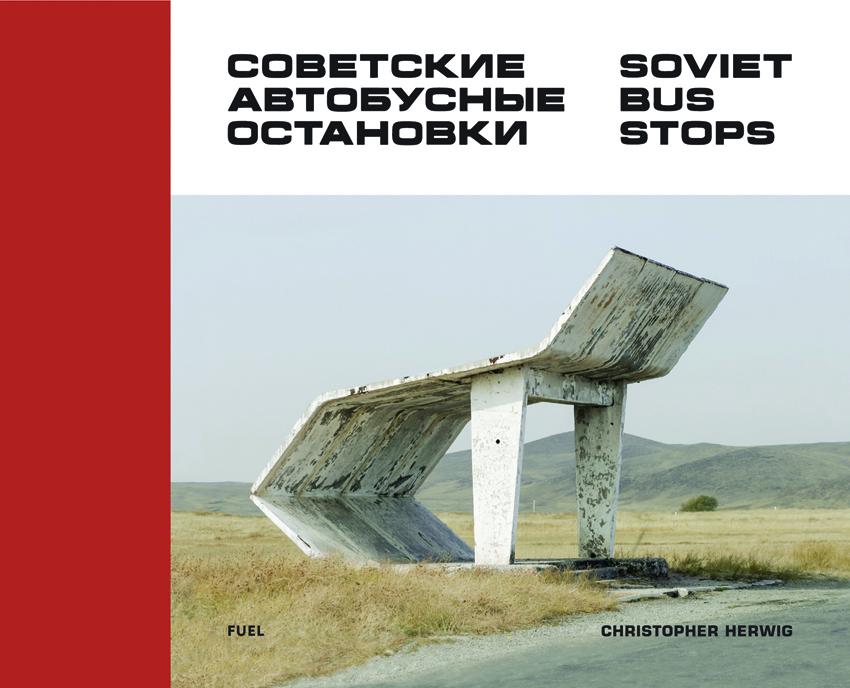
'Soviet Bus Stops' and other Soviet Modernism

Nice piece of news for soviet architecture lovers: Fuel Publishing announces on twitter their new book called 'Soviet Bus Stops'.


Also I'd love to recommend you Facebook SOVMOD page. Russian avant-garde architecture and all this amazing stuff: https://www.facebook.com/sovmodavangard


Spelling Russian subway stations

Best tools are both useful and fun. This describes Alternative Metro map project which could help anyone who comes to Moscow or St. Pete not knowing Russian words but willing to take subway.

Russians use cyrillic sounds so you may never guess by yourself how to spell things you see on the map. Say, Dobryninskaya. How they say it?

Here comes this invention:


On this website you can also practice and listen how people really spell it.
Even if you only learn the station your hotel is on, it's totally worth it. You say the name of the metro station to any person on the street, and he shows you direction.

Now go ahead and try for yourself. Door bring in sky are. Dobryninskaya.

P.S. St. Petersburg also!

A Russian Time Machine

Two photographers came to Russia three times to make portraits. They've seen different Russia, different Moscow. In 1991, 2001 and 2011 they've captured three Russias.

This Calvert Journal post holds many pictures from 1991 trip.

And this is what they've written on their website:
A camera can be a time machine. Through the art of photography, past, present, and future coincide to challenge our concept of time, change, and progress. This has become the backbone of our Moscow portrait series, a collaboration between two photographs spanning two decades. We completed the first installment, a collection of black-and-white portraits, in September 1991, two weeks after the August coup d'état that contributed to the USSR's collapse.
Equipped with a sign explaining in Russian that would we were looking for people to pose for us, we sought out pedestrians between 10 am and 5 pm. Stationing our large format, 4x5-inch folding camera at strategic locations bearing political or cultural significance, we moved each day to cover a new neighborhood or demographic. Just as news headlines failed to truly capture Moscow that year, centers such as Red Square and Gorky Park could not represent the city's human character. However, once pedestirans came into focus before these silent buildings, we began to see a truer face of Moscow. The final 180 portraits included people from all levels and visually defined the capital's hopeful energy.
The outpouring of acclaim this project received merited a second one. We returned ten years later in September 2001 to complete a similar survey. Returning to the same locations, we waited again for volunteers to commit themselves to our record. The differences between passerbys had changed dramatically as a strong rift between rich and poor replaced the previously communal atmosphere of '91.
We returned to Moscow in September 2011 to document its people for a third time. Over a period of three weeks we took about 200 portraits in the same fashion as the two previous sessions.
The Muscovites' active participation provided a direct testimonial to the capital's multitude of personal and social identities. Through their sheer scale, unity, and connotation, these images challenged Moscow's official story. Asking viewers to re-envision this former Soviet captial and the current Russian one through these personalities made this work a marker for the present and a return to the past. The Moscovites' enigmatic ability to define themselves rather than conform to expectations has encouraged us to go about this last series without pre-conceived notions. We wanted to be guided only by our eyes in order to revisit this city and challenge.

Alessandro Albert, Paolo Verzone

Moscow. Expat's point of view


I don't remember when and how I found out about Marco North and his amazing blog http://impressionsofanexpat.blogspot.ru. He is definitely what you'd call "man of the world" as a traveler and a person who could live in any country in my opinion (after surviving Moscow). For various reasons he settled down in Russia and has a daughter he prefers to call E.


Soviet design 1950-1980's

If you happen to be in Moscow anytime soon, here's a tip: you could visit Moscow design museum. For example, they show beautiful collection of Soviet design pieces.


The USSR was a way of life. Holidays and everyday lives of the people who built communism. Iconic design objects and symbols of the big epoch.


In an interview to foreign journalists on the topic of perestroika Mikhail Gorbachev said, pointing at the famous design of the face of his watch “Raketa” (“Rocket”): “we are starting life from zero again”. But is it really effective to start from the beginning, ignoring the lessons of the past? And what can we learn from Soviet design today?


More pictures: http://www.moscowdesignmuseum.ru/en/exhibitions/1/

Kolomenskoe (Moscow)

The awesome spot for summer picnic is located not far from the city center.
It is called Kolomenskoe and is located close to the metro station Kolomenskaya. Just look at the pictures!

Mayakovskaya metro station (Moscow)

One of my favorite metro stations in Moscow is Mayakovskaya. We have amazing Mayakovskaya metro station in St. Petersurg too, again with mosaics, but it should be told another time.

The name of the station refers to Vladimir Mayakovsky, one of very talented futurist poets of the beginning of 20th century in Moscow. Also I see him as Don Draper of Soviet Russia, because his copywriting and ideas were the basement of all advertising in USSR. He was huge, he was adored.

The main thought that days was to build the new life, to make everything work, to find the bright new future to rush into. Mosaic pictures at the ceiling of this metro station take us into that blessed early-Soviet atmosphere.


Some further reading/watching tips:

How to rent a bike in Moscow

As a complementing post to "How to rent a bike in St. Petersburg", I'm writing another one about the capital. Let's see where you could rent a bike...

And if you have some spare time, take a look at the whole article about the subject written by The Village city blog (translated via Google Translate, written half a year ago). I chose only two best spots to write about them and there are more.


Gorky park rentals

The new and cool Gorky park has several points to rent a bike. The place itself is gorgeous as it have been renewed into the hipster-friendly area.You can walk to the park from metro station Park Kul'tury or metro station Oktyabr'skaya.

As I see, there are at least two rentals: Bosco and Velosite (10 a.m. - 10 p.m. daily).


BikeRentalMoscow,
they have guided bike tours too
http://bikerentalmoscow.com/en.html

Address: Pyatnitskaya ul., 3/4, in a 30 min walking distance from Kremlin or next to the Novokuznetskaya metro station.

Timetable:

mon-fri 12 p.m. - 10 p.m.
sat-sun  10 a.m. - 10 p.m.


Do not forget to ask where is the closest bike rent company at your hostel/hotel! That could be the easiest option :)

Happy riding!